In his words
Story
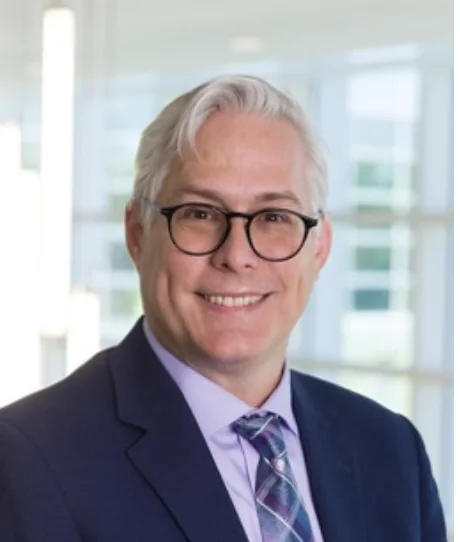
A first-person account of the years that shaped the work.
01
Roots
I was born in East Texas and grew up in Plano, TX. I was an undergraduate at Collin College and earned associate degrees in Math, Physics, and Chemistry. My father's family was salt-of-the-earth farmers in East Texas. My grandmother Sarah Ashburn in Plano, Texas, was a first-grade school teacher and taught me the value of education in changing one's life for the better, and I am forever grateful to her. My maternal grandfather was Karl Everitt Ashburn and was a Ph.D. economist from Duke. My grandparents lived through the Great Depression, and they emphasized how education can transform lives. I was hooked in college to this education mission.
02
Chess & opening moves
I used to play chess with myself each morning and read books about the opening moves of chess having an important role in the overall success of the game.
03
Collin College to UTD and math
I later transferred as an undergraduate to the University of Texas at Dallas (UTD), also known as the "MIT of the South." During my undergraduate years, I was very fortunate to receive the John B Anthony Scholarship and later Redman Scholarships, and had a perfect GPA for the majority of my time. I took three semesters of calculus and later Differential Equations. For a premedical student, this was above and beyond what I needed for medical school, but I became fascinated with the real-world applications of mathematics. I didn't realize then this would help me in the artificial intelligence work I would encounter later in my life.
04
The moment medicine took hold
My grandmother Sarah had a transient ischemic attack in front of me one day when I was in college. I was scared and called my Aunt Carol, who told me to call 911. I was too naive and undereducated at the time to know what atrial fibrillation was, but that is what she was later diagnosed with — and years later she had a left middle cerebral artery stroke with aphasia and right hemiparesis. This was at a time when anticoagulation for atrial fibrillation was not well studied to prevent stroke. My beloved grandmother, who was the classiest lady of my life and the main supporter of my education, became aphasic, had a spastic right hemiplegia, and later required a G-tube while I was in medical school. I came to visit her in Lake Charles, Louisiana, in my fourth year of medical school, and she later passed peacefully in her sleep — something she always wanted. I vowed I wanted to make a difference in neurology, and later chose that as my profession and residency.
05
Mayo Clinic Florida, first neurology class
I was fortunate enough to join the first class at Mayo Clinic Neurology in Florida with legends Frank Rubino, David Capobianco, Paul Brazis, Ryan Uitti, and Zbigniew Wszolek, among others.
06
Founder mentality
I have been an extremely hard-working founder and created many things from the ground up, with the mentality “leave it better than I found it,” similar to my father's farmer side of the family. I have always admired founders like Steve Jobs, and many others, since it requires an exponentially higher amount of energy and passion to create something from nothing (i.e., what Peter Thiel calls Zero to One) than to inherit something others built.
07
Healthcare anywhere
I came to realize over the years that the technologies of the Industrial Revolutions are starting to converge, and that telemedicine, AI-ML, robotics, and the Internet of Things would soon allow us to address healthcare “anywhere” — and this can potentially scale infinitely.
This realization is incredibly powerful — going back to my grandmother, for example, who could have gotten earlier stroke detection, treatment, and a better outcome.
This, coupled with the fact that 5 billion people out of 8 billion people on Earth now have a smartphone in their pocket with FaceTime — essentially supercomputers in their pocket — and have more access to healthcare than at any time in human history.
Also, when NASA astronauts on the Apollo missions were sent to the Moon, they had a flight computer with only kilobytes of memory running at about a megahertz; nowadays an iPhone is many millions of times more powerful computationally speaking, due to Moore's law.
Education and training
Dates and programs below are from the Mayo Clinic biography, except where a note cites another public source.
1996
B.Sc., Molecular and Cellular Biology
University of Texas at Dallas
Graduated with honors. Also a member of the Golden Key International Honor Society (1996).
2001
M.D.
University of Texas Health Science Center at San Antonio
2002
Transitional internship / transitional-year residency
Mayo Clinic in Florida; Mayo School of Graduate Medical Education, Mayo Clinic College of Medicine
2005
Neurology residency
Mayo Clinic College of Medicine and Science; Programs in Florida, Mayo School of Graduate Medical Education
2006
Fellowship, Critical Care Neurology
Mayo Clinic College of Medicine and Science
A 2008 Mayo Clinic publication notes that Dr. Freeman trained at Mayo Clinic in Rochester and was asked to start a neurocritical care unit at Mayo Clinic in Jacksonville.
The public record
Mayo Clinic describes Dr. Freeman as an internationally renowned expert in neurological and neurosurgical emergencies, acute stroke and cerebrovascular diseases, neurohospital medicine, and neurocritical care, citing his three-shield scholarly work in advancing patient care, education, and research.
A 2008 Mayo Clinic publication records that the combined neurology/neurosurgery neurocritical care unit he was asked to start in Jacksonville opened in February 2007. He is the founding Neurosciences ICU medical director at Mayo Clinic in Florida, a co-director of the Mayo Clinic Comprehensive Stroke Center, and program director of two neurocritical care fellowships — one with the United Council of Neurological Subspecialties (UCNS) and one with the Society of Neurological Surgeons (CAST-SNS).
He holds the academic rank of Professor of Neurology and Neurosurgery, with appointments in Neurosurgery, Neurology, and Critical Care Medicine, and serves as a consultant in those disciplines. His Mayo biography places his primary research interests in precision medicine of brain injury and stroke, particularly hemorrhagic stroke, and in intraventricular drug discovery, translation, and application. He was part of the international CLEAR III steering committee.
Mayo Clinic lists more than 230 peer-reviewed National Library of Medicine publications. He is a Mayo Clinic Gold Quality Fellow. He co-chaired the American Academy of Neurology national Workforce Task Force from 2012 to 2015, and has written on advancing population and individualized medicine with robotic telemedicine and mobile health applications. A 2018 Harvard Business Review article on Mayo Clinic’s redesign of stroke care is among the public record of that quality work.
Harvard Business Review: Lessons from Mayo Clinic’s Redesign of Stroke Care. Official biography: Mayo Clinic.